Saturday, May 28, 2016

Making A Low Impact Camp Fire In Your Himalayan Treks


FIRE IS NOT FOR FUN, BUT ONLY FOR SURVIVAL. Not only the smoke that comes out of the fire is harmful for the nature, but also the leftovers. Apart from destroying the natural wood, it also destroys the natural sight of that place.  Use your cooking gears to warm yourself rather than making a fire. Use body warmers which are available these days to keep yourself warm. Be sure to dispose them properly. Still if you need to make a fire, Use a fire container. 
Typically, in the Himalayas, the locals are an expert of making a fire, but they are not aware of the ecological impact of it. Even if they have, they take very little care in making a low impact fire.


What Is A Fire Container ?

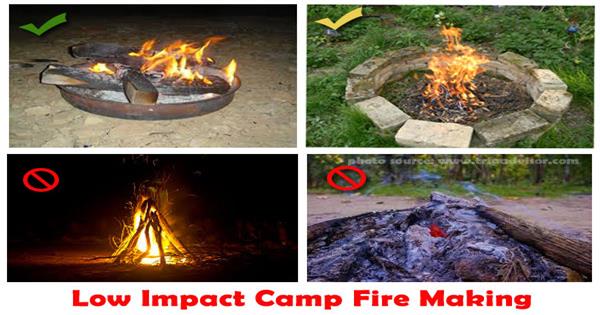
A fire container is a makeshift technique which is used to contain a fire so that you do not scatter the fire and secondly, the left over of the fire can be proper taken care of lessening the impact on the nature.


Rings made of stones:  

If you are a Himalayan Hiker, you must have seen many times a circular ring made by stones to make a fire. This helps in containing the fire and the ashes later on. You typically sprinkle water to reduce and bring down the fire. Then you can bury the ashes. Its a good practice to dig a pith before hand and then build the fire in it. Later you can bury the ashes.  


Using Coal and the Indian Bukhari

The Indian bukhari is nothing but a tin container to make and contain a fire. Mostly chances are you won't be carrying a bukhari  unless its an organized camping. If you have, then its a very good practice in which you carry coal or dried cow dung and use them to make fire. The fire is contained within the tin container and later you can bury the ash or bring it down.


Using A Fire Pan:

Mostly, chances are that you wont put so much effort to build a stone ring for fire. Building it also depends upon availability of that many stones in the campsite. Chances are also that  you won't be carrying the Bukhari to make fire. In that case you have the option to build the fire in a deep cooking pan. It acts similarly to a bukhari.


Some Important Tips:

  1. Its not difficult to build a light weight aluminium can for fire and hang it in your rucksack. No efforts required !
  2. Always try to find the twigs and branches that lie on the ground. These are dry and burn better
  3. Use woods that reduce down completely to ash
  4. Instead of burying the ash, its better you bring them down.
  5. Use fire only when required. Use body warmers instead.

When To Use Diamox


'High altitude' is a very attractive words and a cap which many people love to wear... In other to do so, people do crazy things. Its a good sign, but to do it in the right way is the right thing to do.

Few suggest to be on Diamox right from Delhi, compromising the entire ethics of the so called High Altitude Trek. For them, Diamox is an aid, just like your trekking pole. Even then, people die !! Not once, but many a times !! WHY ?? Starting Diamox from Delhi itself is like walking with your trekking poles in a flat metal road of Delhi !!  Apart from creating a medicated bunch of high altitude trekkers, they also create a trekker who fears to venture out alone or in a smaller group !!

For a base level of understanding of what is Diamox and when does it come to picture, please read the article High Altitude Seriousness  first.

DIAMOX DOES NOT HEAL AMS. IT JUST SPEEDS UP ACCLIMATIZATION. PEOPLE EVEN ON DIAMOX DIE OF HAPE AND HACE.

From our stand, we believe that mountains are beautiful, but with the beauty also comes the fact that they are high, hard and difficult to climb. Trekking to the mountains is not only about the beauty of it, but also about facing the challenges offered by it. Use your aid, but only after accepting the challenges of the mountain, fighting it out..  you do not know, you might win it. Actually your body IS designed to win over it...?

Don't you think we need to try our miracle body out there in the mountains??  There are many mountaineers in our country who don't even know what Diamox is, but have reached terrific heights on the Himalayas!! Not knowing about Diamox is not good either. However, I wanted to highlight that when our body is tested on high altitude by following all the basic rules of acclimatization, it performs extremely well. So why to start on Diamox before even knowing if you require it or not??

Acclimatization has 3 rules, which if followed, maximum acclimatization can be achieved.
  • Climb High Sleep Low
  • Slow Ascend, Do Not Over Exert 
  • Hydrate Hydrate Hydrate 

Diamox is a medicine at the end of the day, a chemical drug, which is only to be taken when required. We believe, your medical kit should always contain high altitude medicines when venturing into the Himalayas, namely Diamox, Dexamethasone and Nifidipine. ( What A High Altitude Medicine Kit Should Contain ). However, you need to use it decisively and only if required.

Rather than being on Diamox, and being on false belief that you will acclimatize well, take other very basic mandatory safety measures. 
  • check your itinerary,
  • check your group size,
  • follow all acclimatization rules,
  • stay light minded,
  • enjoy your time in the mountains,
  • don't keep thinking about your body - let it do its work

Use Diamox, when you see that even after taking all these measures, your body is still lagging behind in acclimatizing to that high altitude. Take Diamox when periodic breathing does not let you sleep comfortably, and that happens mostly over 5000m ( sleeping altitude, not trekking altitude ).  Sleeping is very important at high altitude because that's when you recover, and to sleep well, you might chose to be on Diamox.

Remember, FEAR is a form of advertisement, to build the value of overcoming it, which in return attract more customers to make it a trending style.. However, rate your ventures...  Is that actually so HIGH ??

Use your knowledge and common sense, if you need help, consult.


this blog also appears on: https://himalayanhigh.in/when-to-use-diamox

How To Use Layering, Pack Light And Still Beat The Cold


Introduction

"How many woolens should I pack for the trek ? " is a question I am asked frequently and my first answer to this question always brings up new expressions each time !! :-)
"Carry No Woolens At All"  is the first answer I always give.. Before going into the details, let me go back to the Physics of our junior school and dig out reasoning question which we all took may be in class 8 or 9.

Why covering yourself with 2 thin blanket taken one over other is warmer than 1 thick blanket of combined size of 2 ?

The answer to the question is " ... because when 2 thin blankets are taken over each other, it traps a layer of air in between them. Air is a good insulator and hence it retains the heat generated by your body, keeping you warmer as compared to the thick blanket. "
Full Marks !!  


Navigate To:


Layering Of Clothes - The Concept

Layering of clothes is a concept of putting on clothes on top of one another, to build a better insulation system, which shields away the cold by retaining the heat generated by your body. More the number of layers, more the warmth. It is a clothing strategy built on the fact that air is a good insulator. It is a technique used to keep yourself warm with minimum and light weight clothing while involving in an outdoor activity in a cold environment.


How Does Layering Work

Our body generates heat and in a cold environment, we are kept warm by how much heat our body generates and how well we retain it using our  clothing strategy. The sleeping bags which we use on treks are built using the concept of layering to keep us warm. ( explaining the layering material used in a sleeping bag is not under the scope of this article )
Having said the above, its very important to understand that clothes do not generate heat. Its the retention of heat generated by our body, which keeps us warm.
Remember - each one of are different and have different capabilities of body heat generation. This means that we all might have a differently optimized layering strategies.  However, the heat generating capability of a body is usually similar for similar aged group. As we get older, the heat generating capability decreases and therefore the same layers which was proved to be good for a man of age 30 might not be ideal for a man of age 50. He might need some extra layers.
Keeping the concept in mind, the layers which we use can be divided into 3 different categories - The Base Layer, Mid Layers and finally The Outer Layer


The Base Layer - The Most Important Layer

  • This is the first layer which contacts the body.
  • When you are involved in an activity, your body generates more heat as compared to being ideal. With that, you also sweat a lot.
  • Since it a base layer, its not possible to remove it easily. You will have to remove all the layers on top of it to change your base layers. So better choose a perfect base layer.
So what is a perfect base layer? Below are the points to remember when selecting your base layer.
  1. It has to be breathable, else you feel restricted, uncomfortable and you will sweat more.
  2. It has to disperse the sweat generated by your body, else you will loose lot of body heat to keep yourself warm
  3. It has to be odour free, else you will increase chances of bacterial growth and also create problems for your mates
  4. It has to be smooth for your skin, as you will pile on layers over it, else it will itch when more heat is generated by the body
  5. Always carry a replacement pair
  6. Select a material which if wet, dries quick
Below is a product which we chose from Decathlon, and which I use in myself. The benefits of using it are light weight, compactness and breathable.
base layer upper base layer lower

**  IT IS VERY IMPORTANT TO KEEP YOUR BASE LAYER DRY. IF ON REACHING CAMP YOU REALIZE THAT YOUR BASE LAYER IS WET, CHANGE IT IMMEDIATELY. IMPROPER SELECTION OF UPPER LAYERS CAN MAKE YOUR BASE LAYER WET.


The Mid Layers

  • These are the layer which go on top of the base layers and adds on the insulation by trapping air in between them.
  • This is the layer which is actually responsible for keeping you warm.
  • You can have multiple layers but its better you DO NOT take the count to over 3 as that starts to feel restricted.
  • Keep the layer clothes light, breathable and dry fit to keep dispersing the moisture away
  • Dry-Fit Tees and Fleece is the best second or sometimes third upper layer as it is light and a very good insulator material.
  • Always add one fleece to your packing.
  • If you are trekking in winters, or to higher altitude where you expect morw cold, add Down Jackets to your mid layer.
  • Down jackets are light and warm, and comes in various quality, warmth and thickness.  
  • Remember that socks act as a layer for your feet. You may use woolen knee length socks as layers for your feet.
  • Increasing the number of layers in lower body is not a good idea as you move your legs the most, and it gets warm easier. Just keep your feet warm and comfortable. 
  • A simple multi-pocket hiking pants are the best for your lower body as a mid layer.
midlayer dry fit tee shirt midlayer fleece  


The Outer Layer

  • Its the layer which faces the elements of the environment, like wind, rain, snow, etc
  • Its the layer which protects your inner layer form the elements of environment
  • This layer is the easiest to change and is actually the most changed layer depending on the weather
  • It is important that this layer is breathable as well, as much as possible
  • Breathable water-proof layers are very expensive, so mostly you get unbreathable water proof material.
  • Water proof  material are wind proof as well
  • Wind proof material may be water proof or water resistant
  • Water resistant means that it will repell water upto an extent, but if you expose it in water for longer time, it will get wet.
  • Mostly you will find these outer layers with zippers to enable air flow, usually on chest, arms, sides, back, and thighs
  • So depending on weather, you might need to carry multiple outer layers, like wind proof, rain proof, etc
  • GORE-TEX is the best choice for your outer layer owing to its multiple qualities

What is GORE-TEX 
A simple google search to the above question will give you the answer - "a synthetic waterproof fabric permeable to air and water vapour, used in outdoor and sports clothing."
but it is much more than that.
In generic, the basic Gore-TEX  product always has the below qualities 
  1. Waterproof
  2. Breathable
  3. Windproof
  4. Durable
There are other advanced variants of GORE-TEX which are further better. GORE_TEX ACTIVE SHELL and GORE-TEX PRO. These are further more breathable and durable.
For your further research follow the link https://www.gore-tex.com/products/outerwear/?
There are other brands which sell the GORE-TEX products including shoes.

outer layer jacket outer layer lower


Hybrid Layers

These days there are hybrid layers in the market which has a outer water proof layer with zippers for wind flow and fleece inners. The inner and outer are separable and are kept in together with zips. My take on it is it makes things complex. A separate fleece jacket and outer wind proof jackets gives much required flexibility to me, and mountain demands remaining flexible.


Most Important Points To Protect Against Cold

  1. Your Ears, Feet and Palm are the part of the body which is kept warm, you feel warm. Take care of keeping those warm
  2. Protect your forehead, skull and throat from cold. Use a fleece beanie
  3. Keep the above mentioned layering and its points in mind
  4. Always change to dry woolen socks on reaching the camp
  5. Fill your bottle with hot water and take it inside your sleeping bag
  6. Never ever put your warmest combination at the beginning. Keep it for the worst.
  7. Expose yourself little and slowly to the weather. Let it understand where it is and allow it to  adapt to the cold. It does in couple of days, only if you are not too overprotective about it.
  8.  Never be on wet clothes for a long time. Change to dry cloth immediately
  9. Keep keeping your things dry in your mind while packing
  10. Always try to presume the worst scenario and prepare for it. Rest is take care of by itself in the process.
  11. Check your tents. It has to be better insulated,.
  12. Use fleece sleeping bag liners as a layer for the sleeping bag.
  13. Always buy proper gears for the sport. For example - keep your mufflers away and get a beanie or a buff !!
  14. While purchasing, always consider WEIGHT TO WARMTH RATIO


Disclaimers

*** The products shown are just samples and no commercial intent is there behind the product selection
*** We have chosen Decathlon products because its widely used store in India.
*** The author has just shared his experience of the field


How To Camp Eco Friendly - Leave No Trace - Camping Etiquettes


With increasing in various activities in the wild, its also causing a negative impact on the ecology of the area. The wild animals who are not used to humans are encountering them. The silent valleys are no more silent. Preserving the fast deteriorating nature for our future generation has become a big task now. Below, we have listed camping etiquette which are eco-friendly and has a low impact on the nature. 

Any principle or a good cause is difficult to follow but it takes a good heart and strong intentions to follow that. We just cannot keep taking from nature, keep destroying it and give it nothing in return. We cannot leave things thinking that OTHERS are there to take care of !!


Here it goes..
As for any outdoor activity, planning is very important and every great adventure starts with proper planning. While planning, give emphasis on the Leave Not Trace principles.


Planning Your Trip:

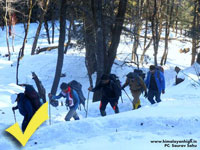
Smaller Groups Is The Most Important Factor: Go in small groups. Your ideal group size should be 10 or it can go as high as 16 but should not go beyond it. You may better decide to split your groups and keep space in between to.  
Pack Right: Plan your packing well. Do not bring tins, cans, extra plastic bottles, glasses etc to the mountains. Use reusable ziploc pouches, even for candies if you cannot do without them.
Carry Extra Bags For Waste: Bring extra bags to bring down you waste from the mountains. If possible, show generosity in cleaning other's waste as well. This creates aNegative Trace
Stay Away From Areas Which See Huge Rush: You should stay away from crowded areas and give them a breather as they are already facing the overload. For example, in Indian Himalayas, Roopkund trek is heavily overloaded during May June and September. So, its better you choose another destination equally beautiful to contribute little from your side to save that biosphere. 
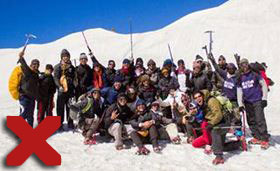
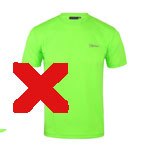
Color Of Your Clothes: Do Not wear fluorescent colored clothes as it scares away the birds and wild animals. Choose colors that are light and goes with natural colors of region.
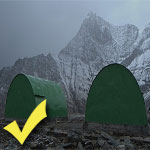
Camp only on designated campsites where available. Usually, the forest department or administrators will mark and designate a campsite. Those areas are well researched by the administration on the impacting factors and are then designated to be  used as camping area.
If there is a trekkers hut built, do plan use it. The purpose of building the trekkers hut is not just earning revenue, but it also aids low impact camping principles
Carry telescopic lens and binoculars for wild life sighting

green peas can    


Camping Etiquette

Never camp close to the water source and do not use the water source directly for washing dishes, cleaning vegetables, washing your face, brushing or other actions which introduces artificial chemicals like soap, detergent etc into the water. Water bodies are frequented by animals. Its important to keep a distance.
Being Loud is absolutely a bad practice in the wild. It disturbs the wild animals. Sometimes, being too loud can trigger avalanche as well in avalanche prone areas. Remember, Loud for human beings is actually too too much loud for the animal ear drums. Being loud might also be not liked by other members in the group or other groups.
Always use a Cat-Style Dry toilets. Remember to use mud to cover your dump before you leave the place. Never use area close to water source as your dumping area. Remember that the water is used by people in the lower regions and other camping groups as drinking water including yourself.
Do not burn plastic waste. Bring them down and discard them in a proper way. You may use the nearest village's waste discarding methods if available. If not, bring them further down to the nearest city or town where it is available. Remember, your waste, your responsibility 
Do not bury your waste as it can be easily dug by wild animals and scattered out.
Keep things Intact, Do not bring them home: Its very important that you leave the things found in the nature like dead bone fragments for example. Do not bring the home as a memory. Use your camera to click pictures and mind to store the memory instead. Its important, as it not only allows others to enjoy similar views but the dead things have a very important role to play in the nature. It still has to give something back to the nature. So its dead, but not finished !! Respect that. 
You may take Roopkund trek as an example. The scattered bones which our seniors saw, are we seeing it now ??  and Will our future generations at all see it ?? 


Making Fire:

FIRE IS NOT FOR FUN, BUT ONLY FOR SURVIVAL. Not only the smoke that comes out of the fire is harmful for the nature, but also the leftovers. Apart from destroying the natural wood, it also destroys the natural sight of that place.  Use your cooking gears to warm yourself rather than making a fire. 
Use body warmers which are available these days. Be sure to dispose them properly.
Use a fire container. If making fire is a must, use a fire container or fire ring. 


People Manners

Mountains are sensitive and Local People are a part of the ecology . Respect It. The locals include the village people on the way or the local staffs used on the activity. Talk to every one with respect unless you get too friendly. In hindi, use 'AAP' to acknowledge.
Ask for permissions: If you are photographing locals, ask for their permission before clicking their photos. If you want to enter the Kitchen tent, ask the cook. If you want to tip the staffs, ask before you give them money. 
Wear Proper Clothes: Usually in Indian Himalayas, if you are camping near a village, Do Not wear shorts, even if you are a man as the local women are shy of it and do not like it. The same applies to women as well, probably at a little higher degree.
Educate and Raise Awareness: It a great opportunity to be able to talk to the locals. Do use the time to increase their awareness and educate them on the ecology, present conditions and ways to make it better. Its a process.


Wild Animals:

Most important thing is to be aware of the simple basic fact that Its you who are in their habitat and not the opposite.
Keep safe and proper distance from wild animals. Do not disturb their privacy.
Do not feed them. Firstly, they are not habituated and might develop a taste for human food which can cascade the problems. It might cause imbalance in their hormones, might change their behavior, and cause other unknown problems.
For Wild Life Sighting, use telescopic lens to photograph them and binoculars to watch them from a safe and unintrusive distance.
Camp away from water source as these places are frequented by wild animals, Ibex dominantly found on Himalayan treks are attracted to salt. So store salt properly. Similar case with Bear and other animals who are attracted by the smell of the food and food products. 


Lastly, repeating what already spoken about - 

Any principle or a good cause is difficult to follow but it takes a good heart and strong intentions to follow that. We just cannot keep taking from nature, keep destroying it and give it nothing in return. We cannot leave things thinking that OTHERS are there to take care of !!


How To Prevent Diarrhea On Treks

" Sir, I crapped in my pants !! "  :-) :-)

... and he threw the trouser after we reached the campsite  :-) 

If he had no extra trouser, he would have had a terribly funny story to tell to anyone for his lifetime.. washing, drying and then wearing it !! :-) :-)

Diarrhea is by far the most common problem we encounter on any trek. On an average, 1 out of 4 trekkers are affected by it. If not well handled, the same diarrhea might had been a nightmare for him, forcing him to retire from the trek itself !!  Mountaineers have died on Everest by slipping and falling to answer the call.


What Causes Diarrhea On A Trek ?

  1. Use of contaminated water
  2. Eating by unwashed hand
  3. Eating fruits directly without washing them
  4. Having Diamox
  5. Eating excess dry fruits
  6. Having excess unpasteurized dairy products
  7. Uncooked or stale meat/fish


Ways To Prevent It

Firstly thing to mention here is that your immunity system mater a lot in these kind of environment and everyone has a different defense system towards the same water. Secondly, never compare yourself with others, specially the local guides and porters as they are brought up using direct water from the stream and their immunity system is well developed against it. 
Do not panic, and take proper prevention steps.
  1. Makes sure that the water you have is clean and free of any germs. While on a trek you have natural water from streams, always make sure that you use running water as the source of your drinking water. Do not use stagnated water.
  2. Treat your water. While the water in the cold is usually good and germ free, Its always recommended to treat your water. There ware various ways to treat the water you are using. You can use UV filters, Iodine or chlorine dioxide solution etc. We have detailed the best ways to treat you water in a trek in a on How To Treat You Water On A Trek
  3. On a trek your hands are usually dirty which is unnoticed. Then in an energetic mood with group of friends, you usually forget to wash your hand before eating. Always remember to wash your hands before eating. Keep your hand sanitizer handy and remember to use it to clean your hand.
  4. Before eating fruits, make sure you are washing them.
  5. Reduce the intake of dry fruits, specially cashews and almonds.
  6. Refrain from having non-veg items on a trek firstly because it is difficult to digest it on high altitude, and secondly, if you are to have it anyways, make sure you have it fresh and treated. There are ways in which you can pack meat on a trek - You can pre-boil it and then coat it with salt and turmeric before beginning the trek. Make sure you consume it within 2-3 days into the trek. This keeps the meat free of bacteria in a cold weather. Ensure that you are cooking it full and bring to boil.
  7. If you are having diamox, have it post meals as having it before you meal has been found causing loose motion.


How to treat it if it hits you?

Even after taking precautions, there are chances that you are still affected by it. Do not start taking antibiotics immediately. At least wait for 3 flushes before you start on antibiotics. Antibiotics along with bad bacteria, also destroys all the good bacteria.
Below are the ways to treat diarrhea on a trek
  • Sip ORS to replenish the salt and fluid loss.
  • Continue to follow the precautionary steps as mentions above 
  • Have a full course of antibiotics -          
         Norfloxacin 400 mg twice a day for three days
         Ciprofloxacin 500 mg twice a day for three days
         Ofloxacin 400 mg twice a day for three days

  • Its a good thing to take Tinidazole to protect against Protozoal  infection as well.     
     
        
Tinidazole 2 grams at bedtime for two nights  ( Norflox TZ contains both )
        Metronidazole 500 mg three times a day for seven days


Anti-motility drugs
 
These medicines do not treat the infection, but actually slows down the bowel movements, reducing the number of flushes. They are useful to treat cramping and should preferably be used with antibiotics to treat the actual infection. 

        Diphenoxylate (Lomotil®)
        Loperamide (Immodium®)
        Codeine and other narcotics


Again, depending on the time of onset and seriousness of the case, we need to decide if to go on Antibiotics + anti motility drugs, just antibiotics or just anti motility drugs.